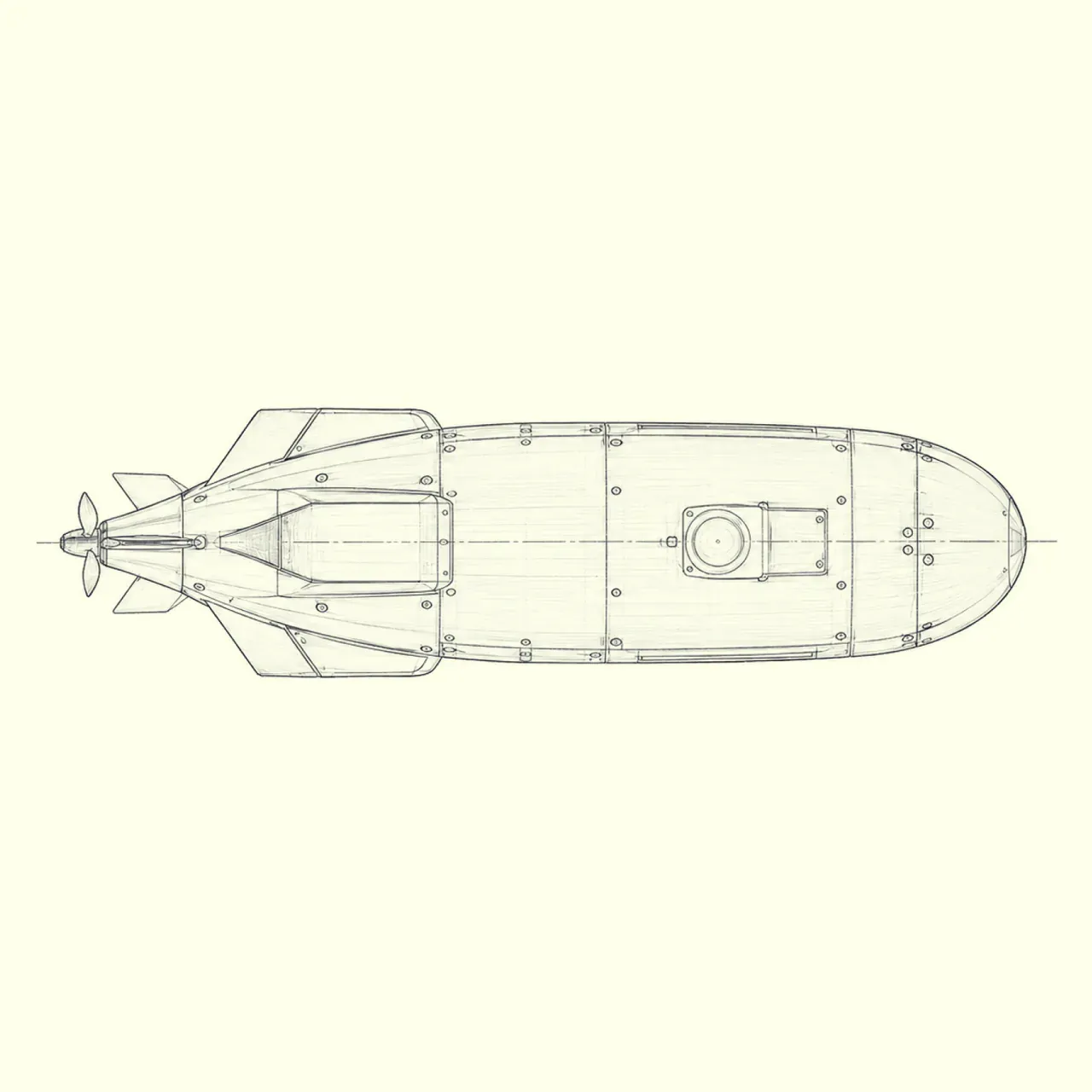

Building a Virginia-class submarine requires thousands of skilled tradespeople: welders, electricians, pipefitters, machinists. Boeing’s recent quality troubles have traced back, in part, to a generation of senior machinists and inspectors who retired without successors. Across the defense industrial base, prime contractors describe the same pattern: jobs go unfilled because the specific expertise required has aged out of the workforce.
When Washington talks about America’s manufacturing crisis, the framing is usually about jobs and factories. Both matter. However, the deeper problem is hard to count and even harder to fix: we lost the knowledge that lived inside those jobs and factories. The welder who knew, by touch, when the seam was right. The process engineer who could troubleshoot a casting defect because they’d seen it five times before. The shop-floor supervisor who knew which fixture to use because his father had taught him.
That kind of knowledge cannot be taught in a classroom, imported, or bid for on the commercial market. Moreover, once it walks out the door, as it has by the millions over the last forty years, getting it back is the work of a generation.
This is the gap the current wave of federal manufacturing policy has not yet closed. The CHIPS and Science Act has begun rebuilding our semiconductor base. Defense Production Act Title III is reviving critical material capacity. The Manufacturing Extension Partnership has, for decades, helped small and medium manufacturers adopt new technologies. Registered apprenticeships are expanding. These are real achievements, and they will matter for decades.
However, none of them alone answer the question of where the expertise comes from. A new fab in Arizona needs operators who know how to run it. A reshored medical device line in Indiana needs technicians who understand cleanroom protocols. A submarine yard needs welders who can pass a nuclear-grade qualification.
That is why Representative Bill Huizenga’s American Manufacturing Revitalization Exchange Program Act, recently introduced in the House, deserves more attention than it has received. The premise is simple and overdue: send qualified Americans to allied countries that have preserved the industrial expertise we let slip, such as Germany, Japan, South Korea, and Taiwan, and let them learn directly from the people doing the work. Bring them home. Put that expertise back into American factories.
It is, at its core, a knowledge migration program. And in a moment when the United States is asking its workforce to staff a manufacturing renaissance roughly the size of the postwar rebuild, knowledge migration is exactly what this nation needs.
What makes this bill different from earlier workforce programs is that it doesn’t stop at sending people abroad. It requires participants to document what they learn in transferable form so that hard-learned tribal knowledge doesn’t disappear when Americans return. It also commits the federal government, through the existing Manufacturing Extension Partnership network and the Department of Labor’s apprenticeship infrastructure, to push that captured knowledge out to manufacturers and training providers across the country. The participant comes home with expertise; the program comes home with a national curriculum.
This is the missing piece of the American manufacturing policy conversation. We have spent five years debating how to get factories back. We have spent less time on what to do with them once they are here. Reshoring without re-skilling is a half-measure, and re-skilling without knowledge capture is a one-generation solution.
At Dirac, we build software that helps manufacturers translate engineering designs into the work instructions operators actually use on the floor, therefore capturing the expertise of senior staff so it can be passed to the next generation rather than lost to retirement. We see the knowledge gap every day, customer after customer, across aerospace, defense, automotive, and industrial. The companies that solve it will own the next century of American manufacturing. The ones that do not will keep struggling to staff lines they have already built.
Congress now has a chance to do something rare in industrial policy: pass a bill that addresses the actual binding constraint. The Manufacturing Revitalization Exchange Program will not, by itself, restore American industrial supremacy. But it is the first piece of federal legislation in a generation that recognizes the strategic value of the knowledge in people’s heads and proposes a serious way to get more of it back.
We cannot reshore what we cannot remember. The arsenal of democracy was built by people who had been taught, in person, by other people. Restoring that chain is the work in front of us, and this bill is how that work begins. Congress ought not wait to pass it.