Production Orchestration: The Missing Layer in Modern Manufacturing

Abstract:
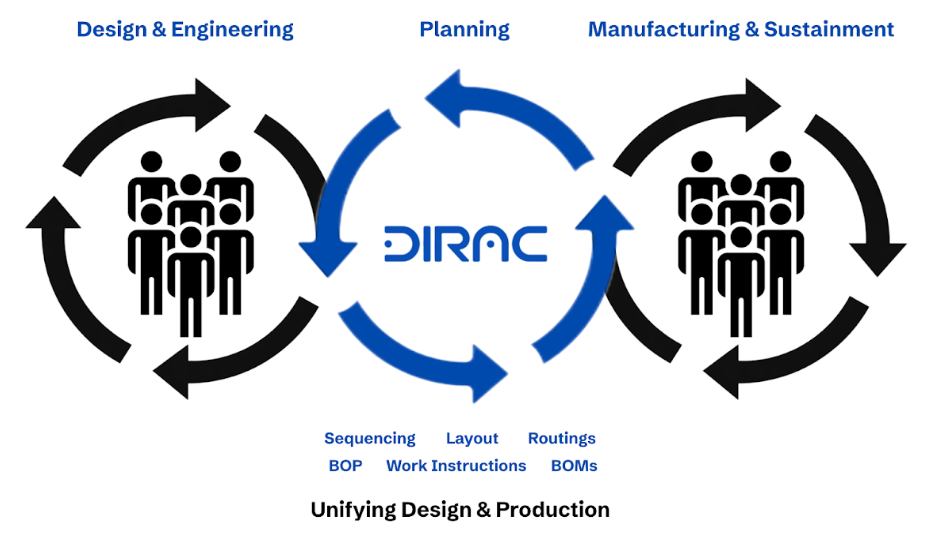
Engineering became model-based. Production did not. That discontinuity is now the primary constraint on scaling modern production.
Over the last decade, engineering teams transformed how products are designed. CAD models became authoritative. Simulation improved. Iteration cycles compressed. Changes propagate digitally and instantly within the design environment.
But once those changes leave engineering, something breaks. They enter a manufacturing environment defined by spreadsheets, static routings, fragmented systems, and manual change management processes. Engineering moves at the speed of software. Factories move in six-month batches. Production orchestration is the layer that closes that gap.
The Problem: Factories Are Static. Design Is Not.
Today, most factories manage change in batches.
Engineering updates accumulate.
Manufacturing teams reconcile them manually.
Documentation is revised.
Routings are adjusted.
Work instructions are regenerated.
Quality processes are revalidated.
This happens periodically, often in large, disruptive waves.
This results in:
- Slow reaction to design change
- High coordination overhead
- Tribal knowledge dependency
- Broken digital thread
- Increased operational risk
Factories were designed to execute stable plans, but modern production is no longer stable.
High-mix programs, compressed development cycles, global supply chain volatility, and workforce turnover mean that change is continuous.
And continuous change cannot be managed with static tools.
Manufacturing Planning vs. Production Orchestration
Manufacturing Planning
Static schedules
Batch updates
Manual reconciliation
Document-driven
Human coordination
Production Orchestration
Dynamic adaptation
Continuous change
Automated propagation
Model-driven
Context-aware AI
Manufacturing planning is static.
It answers:
- What do we need to build?
- In what quantities?
- On what timeline?
Production orchestration is dynamic.
It answers:
- A design just changed. What does that mean for the factory?
- A supplier slipped. What needs to be reallocated?
- New product configurations were introduced. What instructions, routings, and quality checks must adapt?
Planning assumes stability, while orchestration assumes change.
Production orchestration is the automated, system-wide management of change inside a manufacturing environment.
The Core Concept: Factory at the Speed of Design
Production orchestration makes the factory move at the speed of design. When a design change occurs:
- The model updates.
- Context propagates.
- Work instructions adjust.
- MBOMs reconfigure.
- Routings realign.
- Quality checks adapt.
- Resource allocations shift.
Automatically.
The factory becomes context-aware, reconfigurable, and dynamic.
Why This Layer Hasn’t Existed
Manufacturing software evolved in silos.
PLM manages engineering definition.
ERP manages business transactions.
MES manages execution events.
Each system is internally coherent, but none of them orchestrate change across the entire production environment.
Change management became a human function.
Large enterprises created entire organizations responsible for:
- Interpreting engineering change orders
- Updating documentation
- Reconciling discrepancies
- Managing rollout timing
- Coordinating departments
Change management is effectively manual production orchestration. This is expensive, slow, and fragile – and it scales poorly.
AI + Model-Based Context
Production orchestration requires two foundations:
- Model-based manufacturing
- Intelligent automation
The model becomes the single source of authoritative product definition.
AI becomes the mechanism that understands relationships across systems and propagates change contextually.
Without the model, automation lacks grounding. Without automation, the model remains static.
Together, they create a dynamic production layer.
Continuous Change vs. Batched Change
Modern software development uses continuous integration and continuous deployment.
On the other hand, most production environments in factories batch changes quarterly or semiannually. Design updates accumulate, then cascade through the system in disruptive waves, introducing risk and fragility.
Production orchestration enables continuous change.
Instead of waiting months to reconcile updates, the factory adapts incrementally and intelligently as changes occur.
This reduces operational shock, preserves alignment, and increases resilience.
The Strategic Implications
Production orchestration is core, foundational infrastructure that touches manufacturing engineering, change management, industrial engineering, quality, sustainment, supply chain, and operations.
It becomes a competitive advantage, because manufacturers capable of dynamic reconfiguration can:
- Launch programs faster
- Support higher configuration variance
- Reduce ramp time
- Preserve engineering intent at scale
- Adapt to supply chain volatility
The Workforce Reality
A significant portion of industrial tribal knowledge is retiring. The context of skilled, experienced workers lives in spreadsheets, PowerPoints, individual memory, and informal workflows.
Production orchestration codifies that context into structured systems, therefore reducing dependency on institutional memory and embedding operational intelligence into the production layer itself.
Smart labor becomes enabled labor.
The Ideal End State: Adaptive Production as Infrastructure
The ideal state of automated production orchestration is straightforward.
When a design change occurs, the factory adapts automatically. The implications of that change propagate across the production environment without manual coordination. Work instructions update, routings adjust, quality requirements remain aligned, and planning reflects the current product definition.
This is possible because engineering and manufacturing operate from a shared source of truth. The product model becomes the foundation for both design and production, ensuring that engineering intent remains consistent as products move into manufacturing.
In this environment, change becomes a continuous and manageable part of operations, rather than a disruption. Production systems remain aligned with engineering as programs evolve, volumes shift, and new configurations are introduced.
This represents a structural shift in how factories operate. Production systems become dynamic rather than static, capable of responding to ongoing change without periodic reconciliation cycles.
Engineering has already become model-based. Production must follow and become orchestrated.
Production orchestration provides the infrastructure that allows manufacturing to operate as a context-aware and continuously adaptive system.
About Dirac
Dirac is a manufacturing technology company building the AI-driven system of record for production orchestration. Their product BuildOS is the first AI-driven work instruction platform that replaces document-driven manufacturing with an AI-driven, dynamic, model-based system. Dirac’s mission is to rebuild the industrial capacity of the West by turning manufacturing facilities into context-aware, adaptive, dynamic environments.
