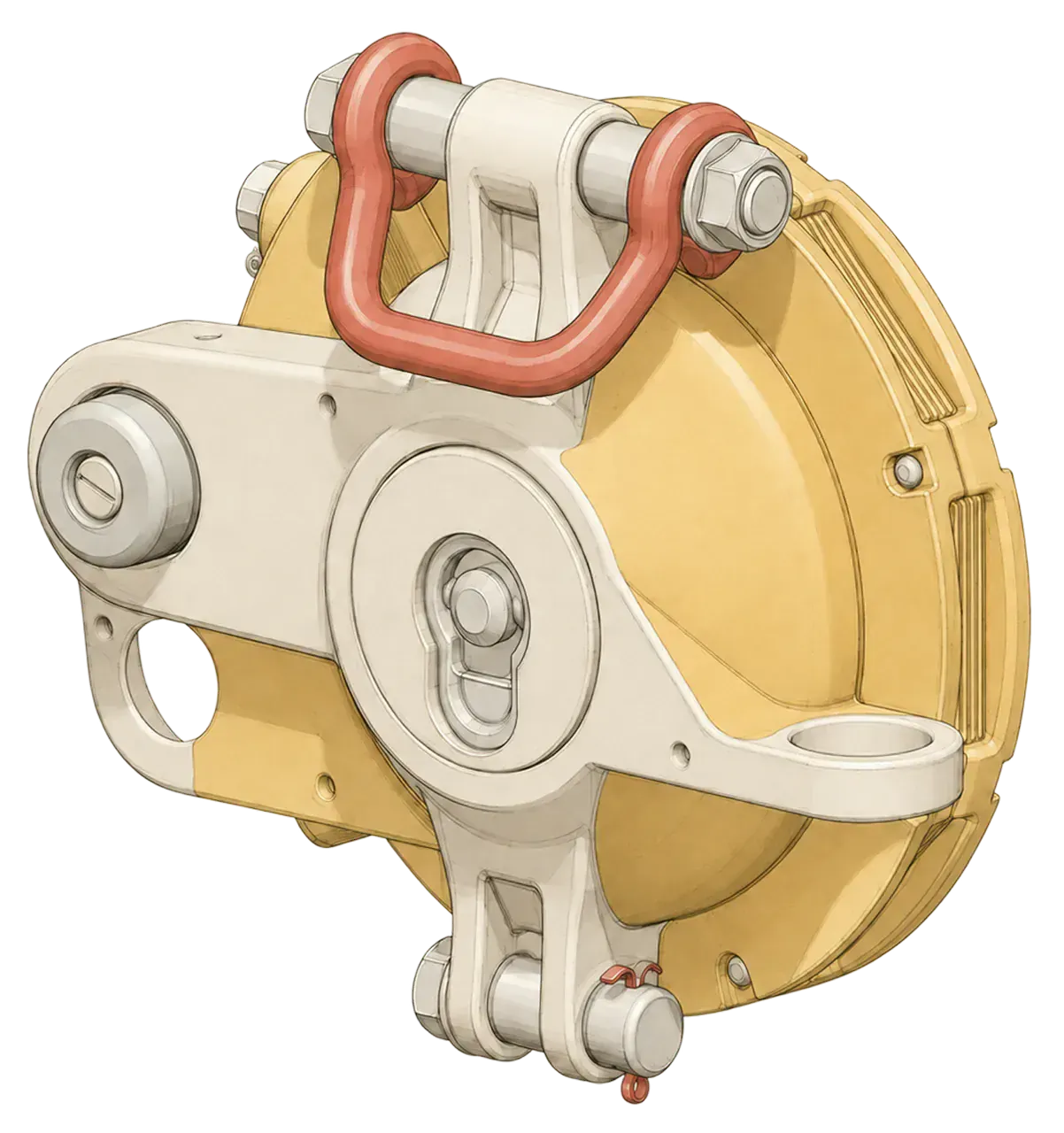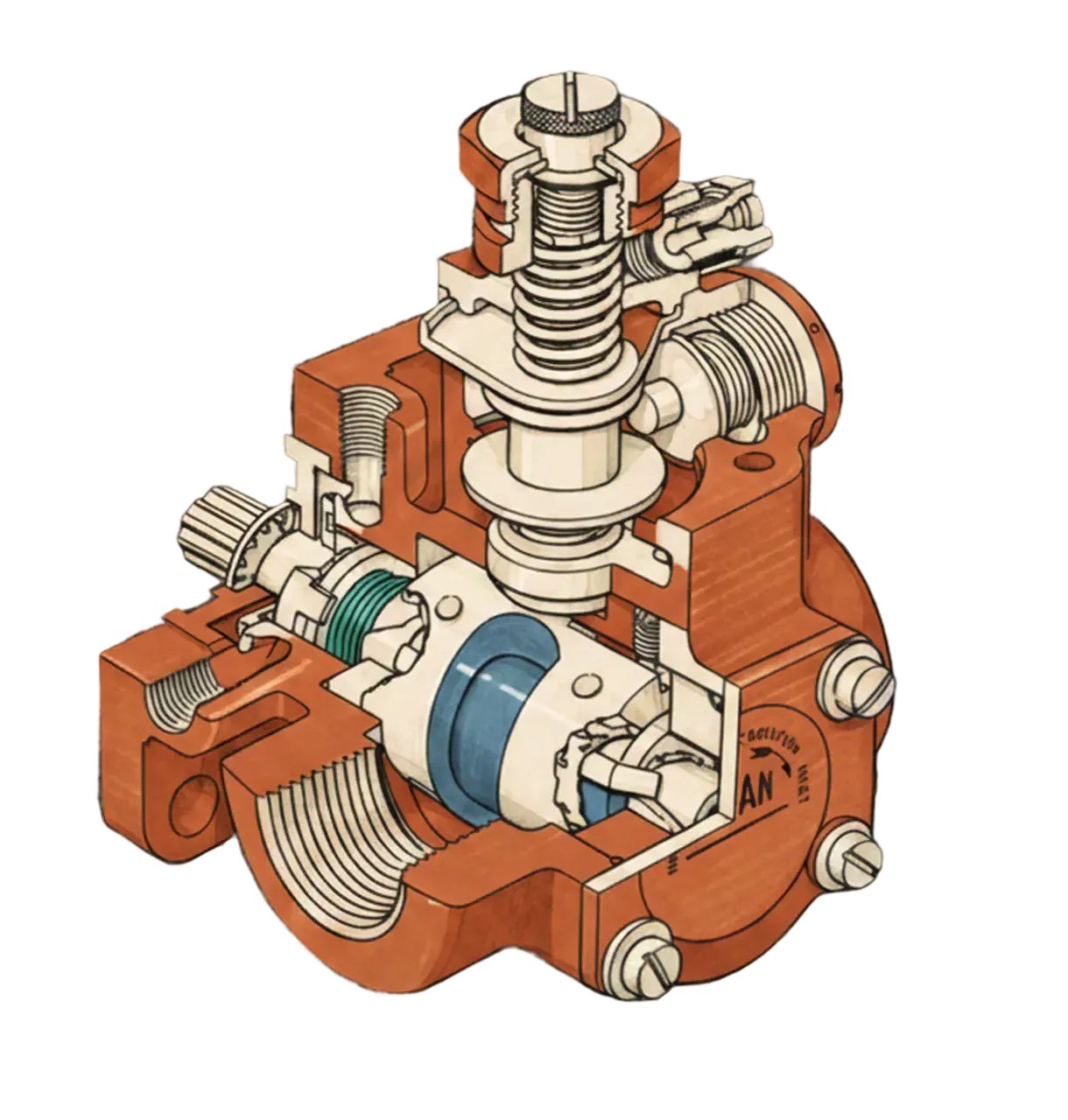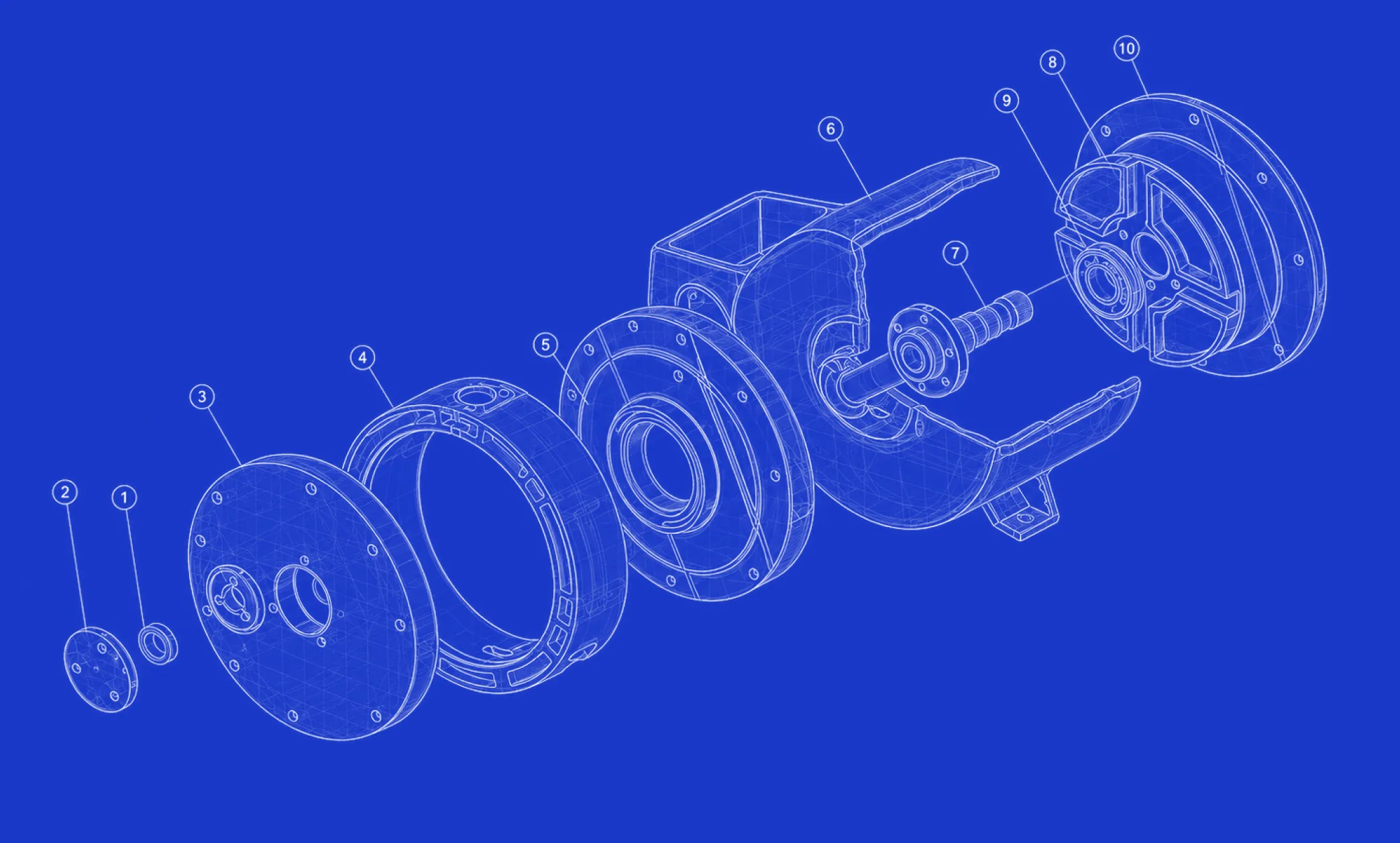
Every factory has a moment where the design stops being an idea and becomes a set of physical decisions.
Which operation happens first? Which station owns it? Which fixture holds the part? Which tool is required? Where does inspection happen? What should the operator see before they begin?
That moment is process planning.
Process planning decides how a product will actually be manufactured. A 2025 Wiley textbook excerpt describes manufacturing process planning as choosing the right materials and methods, then determining the most efficient sequence of steps to produce a high-quality product at reasonable cost (Wiley, 2025).
For advanced manufacturers, this is no longer just a pre-production task. Process planning is becoming one of the main ways factories preserve knowledge, reduce rework, and scale output without forcing manufacturing engineers to manually rebuild the same context again and again.
A Process Plan Is More Than a Routing
Many teams think of a process plan as a routing: operation 10, operation 20, operation 30. But a real process plan contains the logic of the build.
It connects the design to machines, tools, labor, quality requirements, materials, stations, and operator instructions. It answers practical questions: What is the safest build order? Which step creates the most quality risk? Which inspection needs to happen before the assembly moves downstream? Which previous build teaches us something useful about this one?
That kind of judgment is manufacturing knowledge. When it is captured well, the factory gets smarter. When it is scattered across PDFs, screenshots, spreadsheets, emails, and memory, every new program becomes harder than it needs to be.
The Old Model Assumes Stability
Traditional process planning was built for a slower manufacturing era. Engineering released the drawing, manufacturing interpreted it, the planner built the route, work instructions were written, and production began. Changes still happened, but they moved slowly enough that teams could usually track them down by hand.
That rhythm no longer matches the way advanced manufacturing operates. Products are becoming more configurable, supply chains are shifting more frequently, and new product introduction timelines are tightening. Across defense, aerospace, robotics, agriculture, and industrial manufacturing, companies are under growing pressure to turn designs into buildable products faster.
At the same time, the experience base many factories rely on is under strain. The U.S. Bureau of Labor Statistics projects nearly 1 million openings in production occupations each year, on average, from 2024 to 2034, largely as workers retire or move into other occupations (U.S. Bureau of Labor Statistics, 2026). In May 2026, BLS reported 529,000 manufacturing job openings in its JOLTS data (U.S. Bureau of Labor Statistics, 2026).
That matters because process planning has always depended on experienced people: the planners, engineers, and operators who know how a design will behave once it reaches the floor. When those people are scarce, overloaded, or nearing retirement, manufacturers need a better way to capture their knowledge and reuse it across programs.
The Hidden Cost Is Replanning
The expensive part of process planning is not always the first plan, but instead, it is the replanning. Change rarely arrives as one clean event. A design revision, a supplier substitution, a tooling constraint, a capacity issue, a technician’s improvement, or a new quality requirement can all force the process plan to move.
Each change sets off a chain reaction across the factory. The route, instructions, model context, shop-floor communication, and retired versions all have to stay aligned, or the plan starts drifting away from the work.
When that alignment depends on manual work, manufacturing engineers end up holding the system together by hand. Product data, execution data, instruction packages, and shop-floor knowledge all drift into separate places, leaving engineers to reconcile what the factory is supposed to build with what is actually happening on the floor.
Why Model-Based Planning Matters
The shift toward model-based manufacturing changes the foundation of the process plan.
ASME Y14.41 establishes requirements for digital product definition data, including annotated models (ASME, 2026). ISO 10303-242 covers managed model-based 3D engineering (ISO, 2022). Both point toward a larger industry movement: more product and manufacturing information is moving into structured digital models instead of living only in separate drawings and documents.
For process planning, that means the plan does not have to start from a blank page. The system can understand more about geometry, assembly structure, dimensions, tolerances, and product relationships. Manufacturing engineers can spend less time reconstructing product intent and more time improving the build strategy.
The factory still needs human expertise, but the role of that expertise changes. Instead of manually copying, screenshotting, and rewriting, engineers can review, correct, enrich, and approve a plan that is already connected to the product.
Where BuildOS Fits
Dirac’s BuildOS is built for this version of process planning.
BuildOS helps manufacturers turn 3D models into interactive work instructions and production plans. Instead of treating process planning as a document-authoring workflow, BuildOS uses the product model as the starting point for build sequence, step visuals, and operator guidance.
That changes the job from manual translation to model-based review and refinement. Manufacturing engineers still own the plan, but they are no longer forced to recreate every instruction by hand. As the product changes, the planning layer can stay closer to the current design, reducing the drift that often appears between engineering and the floor.
For manufacturers building complex mechanical assemblies, this is the difference between process planning as paperwork and process planning as production infrastructure.
When every new design has to be interpreted by hand, every change turns into a documentation chase, and every lesson learned stays trapped in someone’s memory, the factory keeps paying for the same knowledge gaps. The next generation of process planning will not be a cleaner PDF. It will be a living system that connects product data, factory capability, operator guidance, and production learning so manufacturers can plan faster, adapt faster, and carry knowledge forward from one build to the next.
A factory can only move as fast as it can decide how work should happen.
Sources:
Wiley, Manufacturing Process Planning: A Practical Approach for Mechanical Engineering excerpt: https://catalogimages.wiley.com/images/db/pdf/9781394273508.excerpt.pdf
U.S. Bureau of Labor Statistics, manufacturing career outlook: https://www.bls.gov/careeroutlook/2026/article/manufacturing.htm
U.S. Bureau of Labor Statistics, May 2026 JOLTS manufacturing openings: https://www.bls.gov/news.release/jolts.t01.htm
ASME Y14.41, Digital Product Definition Data Practices: https://www.asme.org/codes-standards/find-codes-standards/y14-41-digital-product-definition-data-practices
ISO 10303-242, Managed model-based 3D engineering: https://www.iso.org/standard/84667.html